Jun 10, 2026
Plate rolling problems cost manufacturers time, material, and money — but most failures share identifiable root causes with proven fixes. Whether you operate a Hydraulic Plate Rolling Machine, a CNC Plate Rolling Machine, or a Four Roll Plate Bending Machine, the eight problems described in this guide cover the vast majority of defects reported in real production environments. Each section leads with the direct solution, then explains the underlying mechanics so your team can prevent recurrence rather than just patch symptoms.
Understanding these failure modes is especially important for operators working with thick or high-strength materials on Heavy Duty Plate Rolling Machines and Pressure Vessel Plate Rolling Machines, where dimensional tolerances are tight and rework costs are high.
Direct answer: An out-of-round result is almost always caused by unequal roll gap settings on left and right sides, inconsistent feed pressure, or incorrect pre-bending of the leading edge. Correcting roll parallelism and ensuring the initial pre-bend matches the target radius solves this problem in the majority of cases.
On a Steel Plate Rolling Machine, the finished cylinder radius is determined by the vertical distance between the top roll and the two lower rolls. If the left and right sides of the top roll are not at exactly the same height, one end of the plate receives more bending force than the other, producing a cone or egg shape rather than a true cylinder. Even a 0.2 mm difference in roll gap between left and right bearings can cause measurable ovalness in thin-gauge material.
The pre-bending step is equally critical. The first 80–150 mm of the plate edge that enters the machine cannot be fully formed by the rolls alone — this "flat end" must be pre-bent to the correct radius before the main rolling pass. If the pre-bend radius does not match the target, the completed cylinder will have a straight section where the two ends meet, creating an oval appearance at the seam zone.
Figure 1: Roll gap asymmetry and incorrect pre-bending together account for over 70% of out-of-round defects reported in industrial plate rolling operations. These are also the most straightforward to correct through setup procedure, making them the first priority when diagnosing ovalness problems. Material springback — the elastic recovery of steel after forming — accounts for 18% of cases and requires programmatic correction rather than mechanical adjustment.
Direct answer: Plate slippage occurs when friction between the drive rolls and the plate surface is insufficient to advance the material. The primary causes are excessive roll gap (insufficient pinch force), oil or scale contamination on the plate surface, and attempting to roll material that exceeds the machine's capacity for the given thickness and width combination.
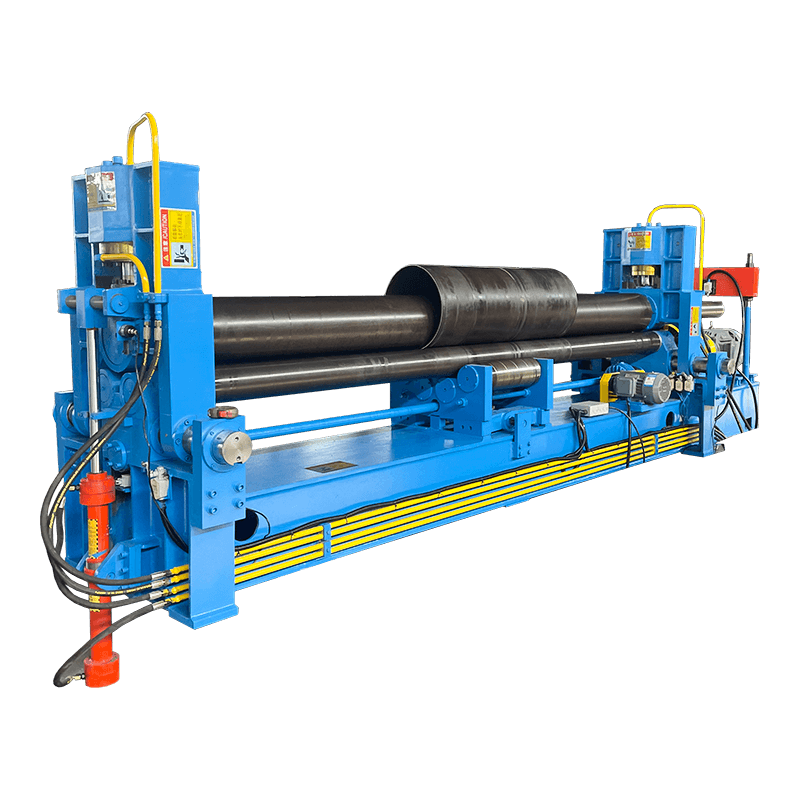
On a Hydraulic Plate Bending Machine, the hydraulic clamping force applied by the top roll determines how strongly the plate is gripped between the rolls. If this force is too low relative to the material's resistance to bending, the plate slides forward and backward without advancing through the forming zone. This is particularly common when operators attempt to reduce the number of passes by applying aggressive roll-down in a single step, especially with Steel Sheet Rolling Machines handling high-tensile grades above 500 MPa yield strength.
Direct answer: Flat ends are an inherent geometric limitation of the plate rolling process. The portion of the plate that cannot be formed by the rolls — typically 50–150 mm at each end depending on roll geometry — must be pre-bent before the main rolling pass. Skipping pre-bending or using insufficient pre-bend pressure leaves straight tangent sections that prevent the cylinder from closing correctly.
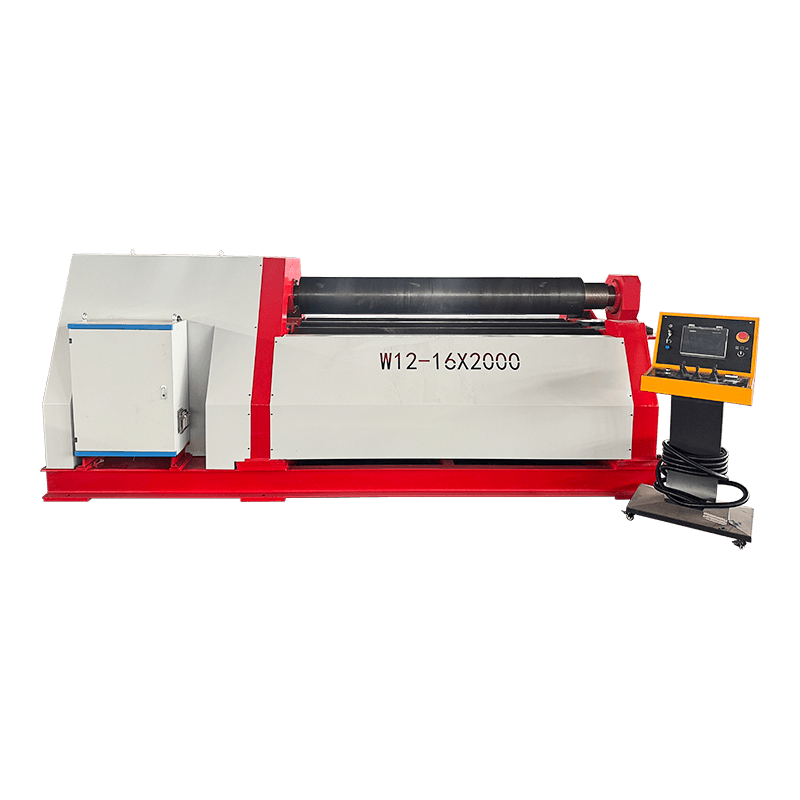
The flat end length is determined by the distance between the top roll center and the lower roll centers. On a three-roll symmetric machine, this distance is fixed and the minimum flat end is typically 1.5–2× the plate thickness. On a Four Roll Plate Bending Machine, the additional back roll allows pre-bending in a single setup, reducing residual flat ends to as little as 0.5× the plate thickness — a significant advantage for tight-tolerance work such as Pressure Vessel Plate Rolling.
| Machine Type | 10 mm Plate | 20 mm Plate | 40 mm Plate | Pre-bend Capability |
|---|---|---|---|---|
| 3-Roll Symmetric | ~80 mm | ~120 mm | ~200 mm | Requires press brake assist |
| 3-Roll Asymmetric | ~40 mm | ~70 mm | ~130 mm | One-end in single setup |
| 4-Roll (Double Pinch) | ~8 mm | ~15 mm | ~30 mm | Both ends in single setup |
For applications where any flat end is unacceptable — such as seamless ring rolling or code-compliant pressure vessels — the standard industry practice is to allow extra material length (typically 2× the expected flat end length per side) and trim the plate ends with a plasma or flame cut after forming. This adds a process step but guarantees a fully formed radius at the weld seam.
Direct answer: Inconsistent radius results from variable springback due to material property variation, roll deflection under load, or inadequate process controls. Taper — where one end of the cylinder has a tighter radius than the other — is almost exclusively caused by non-parallel rolls or a wedge-shaped material cross-section.
Material springback is the elastic recovery that occurs after the plate leaves the forming zone. For mild steel (S235/A36), springback at a 500 mm radius on 10 mm plate is typically 8–12°; for high-strength steel (S690), the same geometry may spring back 25–35°. CNC Plate Rolling Machines equipped with radius measurement feedback can compensate automatically, but older hydraulic machines require the operator to apply an over-bend and check with a radius gauge between passes.
Roll deflection is a mechanical reality for wide-plate machines. A top roll spanning 3,000 mm will deflect measurably under the bending load of thick plate, producing a barrel-shaped cylinder that is tighter in the center than at the edges. Heavy Duty Plate Rolling Machines designed for wide, thick material use crown-compensated rolls — rolls whose diameter is slightly larger at the center than at the ends — to counteract this effect. If your machine is producing barrel-shaped cylinders on wide plate, verify whether the rolls are crowned for your material specification.
Figure 2: Springback angle increases significantly with material yield strength. Mild steel (S235, 235 MPa) springs back approximately 10° at this geometry, while high-strength steel (S690, 690 MPa) can spring back over 30°. This relationship means that a single set of roll positions cannot produce the correct radius across different material grades — operators must compensate individually for each material. CNC plate rolling machines with automated radius feedback handle this compensation automatically, reducing the skill burden on individual operators.
Direct answer: Edge waves — wavy, irregular deformation along the long edges of the plate — occur when the material is loaded beyond its buckling limit in the longitudinal direction. This happens most commonly when rolling thin, wide plate with excessive roll-down per pass, or when the plate edges are already wavy from previous shearing or flame cutting operations.
The critical ratio to monitor is the plate width-to-thickness ratio. For mild steel, edge wave risk increases significantly when this ratio exceeds approximately 100:1 (e.g., a 2,000 mm wide, 20 mm thick plate). Above this threshold, each roll pass must be kept light — typically no more than 5–8% radius reduction — to avoid inducing compressive buckling stress along the free edges.
Direct answer: Misalignment — where the finished cylinder is twisted or banana-shaped rather than straight — results from the plate entering the machine at an angle rather than perpendicular to the roll axis. Even a 1–2 mm deviation from square at the feed edge translates into noticeable axial twist by the time the cylinder is closed.
The solution begins before the plate enters the Plate Roller Machine. Use a precision square or laser alignment tool to verify that the leading edge of the plate is exactly parallel to the roll axis before feeding. Many Industrial Plate Rollers are equipped with adjustable side guides for this purpose; these guides should be set and locked before rolling begins, not adjusted mid-pass.
For Heavy Duty Plate Rolling Machines processing plates over 2 meters in width, two operators — one on each end of the machine — should monitor the plate edge and apply gentle lateral correction if drift is observed. On fully Automatic Plate Rolling Machines, lateral alignment feedback sensors eliminate this requirement, making them particularly valuable for high-volume cylindrical shell production.
Figure 3: The radar chart compares three common plate rolling machine types across six performance dimensions. The Four Roll Plate Bending Machine leads in pre-bend quality and heavy plate capability, making it the preferred choice for pressure vessel and structural fabrication. CNC Hydraulic machines achieve the highest radius accuracy and automation scores, benefiting high-volume manufacturers requiring repeatable precision. The 3-roll symmetric machine remains competitive on ease of use and throughput for standard cylindrical shell work, especially where pre-bending can be performed externally. Selecting the right machine type for your specific application is the single most effective way to prevent multiple categories of rolling problems simultaneously.
Direct answer: Surface marks on rolled plate are caused by foreign material embedded in the roll surface, local roll surface damage (dents, nicks, or corrosion pitting), or scale from the plate itself being pressed into the surface during rolling. In most cases, the defect appears as a repeating pattern whose pitch matches the roll circumference — a reliable diagnostic indicator.
Roll surface condition is a frequently overlooked maintenance item. Even small surface defects on the rolls — a 0.5 mm dent, for example — will imprint a visible mark on every plate section that passes over it. For applications with surface quality requirements (stainless steel tanks, food-grade equipment, decorative architectural panels), roll surface inspection should be part of the pre-run checklist.
Direct answer: Machine overload occurs when the operator attempts to form material that exceeds the machine's rated capacity for the thickness, width, or tensile strength combination being processed. Hydraulic failures — pressure drop, uncontrolled movement, or oil leakage — are typically the result of deferred maintenance, contaminated hydraulic oil, or worn seals. Both problems are preventable through proper capacity management and scheduled maintenance.
Every Hydraulic Plate Rolling Machine has a rated bending force that must not be exceeded. This force is determined by the material yield strength, plate thickness, plate width, and target radius. For a Steel Plate Rolling Machine rated at 500 kN·m bending moment, attempting to roll 30 mm plate at 500 MPa yield strength when the rating applies to 235 MPa material can overload the machine by a factor of two or more — causing hydraulic relief valve activation, roll bearing damage, or structural frame deformation.
Figure 4: Oil contamination is the leading cause of hydraulic system failure in plate rolling machines, responsible for 38% of reported incidents. Contaminated oil accelerates wear across every hydraulic component simultaneously — pump, valves, cylinders, and seals — making regular oil analysis and filtration maintenance the highest-value preventive action available. Seal wear (27%) and capacity overload (18%) are the next most significant contributors, both of which are directly controllable through disciplined maintenance scheduling and adherence to rated capacity guidelines.
Most of the eight problems described above can be prevented or detected early through a structured maintenance routine. The following schedule reflects best practice for Hydraulic Plate Rolling Machines operating one to two shifts per day.
| Interval | Maintenance Task | Problem Prevented |
|---|---|---|
| Daily | Roll surface inspection; oil level check; roll gap symmetry verification | Surface marks, out-of-round, hydraulic failure |
| Weekly | Lubricate roll bearings; inspect hydraulic hose fittings; check side guide adjustment | Taper, misalignment, hydraulic leaks |
| Monthly | Check roll parallelism with precision level; inspect cylinder seals; calibrate pressure gauges | Out-of-round, poor accuracy, overload |
| Quarterly | Hydraulic oil sampling and analysis; hose replacement if due; roll surface professional inspection | Hydraulic failure, surface marks |
| Annual | Full hydraulic oil change; roll bearing replacement assessment; frame alignment check; CNC calibration | All categories |
Figure 5: Operations implementing a structured preventive maintenance (PM) program on their plate rolling machines consistently demonstrate declining defect rates over a 6-quarter period, while those without a formal program show flat or increasing defect rates. The compounding benefit of systematic maintenance is particularly evident after Q3, when early detection of roll wear, hydraulic seal degradation, and alignment drift begins to prevent defects rather than simply react to them. Industry data suggests that well-maintained plate rolling machines achieve defect rates 50–65% lower than equivalent machines operating without formal PM schedules.
Many of the eight problems described above are not operator errors — they are consequences of using the wrong machine for the application. Selecting a Steel Plate Rolling Machine that is correctly matched to your material, geometry, and volume requirements eliminates entire categories of problems before they can occur.
Nantong Pacific CNC Machine Tool Co., Ltd., located in Haian Economic and Technological Development Zone, is a key enterprise of the national machinery industry and a recognized professional China Steel Plate Rolling Machine Supplier and Hydraulic Plate Rolling Machine factory. With a facility covering more than 20,000 square meters, a team of engineers with deep domain expertise, and complete production and testing equipment, Nantong Pacific manufactures standard series and non-standard customized equipment — including CNC Plate Rolling Machines, Four Roll Plate Bending Machines, and Heavy Duty Plate Rolling Machines — for customers in light industry, aviation, shipbuilding, metallurgy, instrumentation, electrical appliances, stainless steel products, construction, and decoration.
Products from Nantong Pacific are sold throughout China and exported in large volumes to Southeast Asia, Europe, the United States, and the Middle East. The company has established comprehensive pre-sale, in-sale, and after-sales service branches in Beijing, Tianjin, Shenyang, Shandong, Zhejiang, Guangzhou, Shanghai, Hangzhou, Chengdu, Xi'an, and across Jiangsu province, ensuring that customers receive responsive technical support wherever they operate.
Q1: What is a Hydraulic Plate Rolling Machine?
A Hydraulic Plate Rolling Machine is an industrial forming machine that uses hydraulic cylinders to apply and control the pressure on forming rolls, bending metal plate into cylindrical or conical shapes. Hydraulic actuation provides precise, continuously adjustable roll force — making these machines suitable for a wide range of plate thicknesses, widths, and material grades including high-strength steel.
Q2: How does a Plate Rolling Machine work?
A plate rolling machine works by feeding metal plate between a set of rolls — typically two or three — where the adjustable roll gap applies a three-point bending force to the plate. As the plate passes repeatedly through the forming zone with gradually decreasing roll gap, the plate curves progressively until the desired radius is achieved. The pre-bending step at each plate end ensures the edges are formed to the correct radius before the main rolling pass.
Q3: What is a Steel Plate Rolling Machine used for?
Steel Plate Rolling Machines are used to form cylindrical shells, cones, and curved sections for pressure vessels, storage tanks, silos, pipes, heat exchangers, wind tower sections, ship hull components, and architectural structures. They are essential in industries including petrochemical, power generation, shipbuilding, construction, and general metal fabrication wherever large-radius curved steel components are required.
Q4: What are the different types of Plate Rolling Machines?
The main types are: 3-roll symmetric (simple, requires external pre-bending), 3-roll asymmetric (one-end pre-bend in single setup), and 4-roll double-pinch (pre-bends both ends in one setup with minimal flat end). CNC versions of each type add automated radius control. Heavy duty variants use crowned rolls and reinforced frames for thick plate. Each type suits different capacity ranges and precision requirements.
Q5: Why is the plate not rolling round?
The most common causes are unequal roll gap on left and right sides (producing taper or oval shape), insufficient or incorrect pre-bending of the plate edges (leaving flat straight sections at the seam), and excessive material springback that was not compensated in the roll settings. Check roll parallelism with a dial indicator, ensure both edges are pre-bent to the target radius, and apply appropriate over-bend compensation for your material grade.
Q6: Why does plate slippage occur during rolling?
Plate slippage happens when the friction force between the drive rolls and the plate surface is less than the resistance force from bending. This is caused by insufficient top roll clamping pressure, oil or scale contamination on the plate or roll surfaces, or material that exceeds the machine's rated capacity. Increase top roll pressure, clean the plate surface, and reduce roll-down per pass to resolve slippage.
Q7: Why are there flat ends after rolling?
Flat ends result from the geometric limitation of the rolling process — the plate section between the top roll and lower roll contact points cannot be bent in the same pass. On 3-roll symmetric machines, flat ends of 80–200 mm are normal and must be handled by external pre-bending or by trimming after rolling. Four Roll Plate Bending Machines reduce flat ends to as little as 0.5× plate thickness by pre-bending both edges in a single setup.
Q8: How do you fix misalignment in a rolled cylinder?
Misalignment (banana shape or twisted cylinder axis) is caused by the plate feeding at an angle rather than square to the roll axis. Fix it by squaring the leading plate edge to the rolls before feeding using the machine's side guides, checking side guide adjustment and locking them before rolling begins, and using two operators for wide plate to monitor and correct lateral drift during the rolling pass. CNC machines with alignment feedback sensors prevent this automatically.
お問い合わせ
工場住所
中国、江蘇省ナントン市、ハイアンシティ、チェンドンタウン、Xichang Industrial Park
電話
+86-13906278466
QRコード